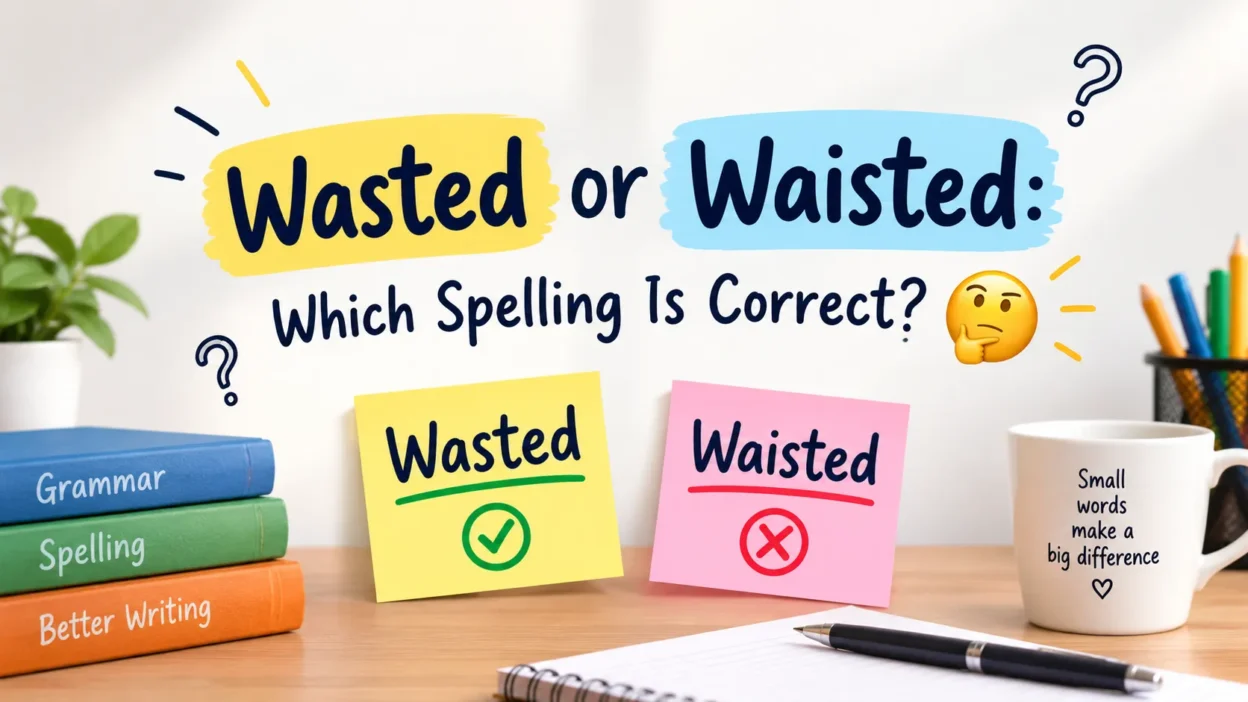
Have you ever wondered whether to write wasted or waisted? These two words sound exactly alike, but they carry different meanings. One describes something you used carelessly, while the other relates to the shape of the waist. Choosing the right spelling helps you communicate clearly in emails, blog posts, text messages, and everyday conversations.
The word wasted usually describes lost time, money, energy, effort, or opportunities. It can also describe someone who feels physically weak or someone who has become very intoxicated. In contrast, waisted describes the shape of a garment around the waist. You will often see this word in fashion descriptions, especially when people discuss dresses, jackets, skirts, and other fitted clothing.
Both spellings are correct, but you cannot use them interchangeably. The context tells you which word fits your sentence. This guide explains the difference between wasted and waisted, provides practical examples, highlights common spelling mistakes, and shares easy ways to remember the correct spelling.
📖 Wasted vs. Waisted: What’s the Difference?
The main difference between wasted and waisted lies in their meanings and grammatical uses. Although they sound identical in standard English, they come from two different words: waste and waist.
Wasted is the past tense and past participle of the verb waste. People use it when they describe something they spent carelessly or an opportunity they failed to use effectively. The word also works as an adjective in expressions such as wasted energy and getting wasted.
Waisted is an adjective that describes an object or garment with a particular shape around the waist. Fashion writers commonly use it to explain how clothing fits around the middle of the body.
| Word | Meaning | Example |
|---|---|---|
| Wasted | Used carelessly or without benefit | I wasted my afternoon. |
| Wasted | Spent unnecessarily | We wasted too much money. |
| Wasted | Very intoxicated | He got wasted at the party. |
| Wasted | Extremely thin or physically weakened | He looked wasted after his illness. |
| Waisted | Shaped around the waist | She wore a waisted jacket. |
| High-waisted | Designed to sit high on the waist | She bought high-waisted jeans. |
Quick rule: Choose wasted when you discuss lost time, money, effort, or intoxication. Choose waisted when you describe the shape of clothing or another object around the waist.
✅ What Does Wasted Mean?
The word wasted describes something that someone used carelessly, spent unnecessarily, or failed to turn into a useful result. It comes from the verb waste, which means to use resources without getting the expected benefit.
For example, imagine spending three hours scrolling through your phone when you planned to finish an important assignment. You might say that you wasted three hours. Similarly, buying something you never use can feel like a waste of money.
The word also appears in informal conversations about alcohol and drugs. In that context, wasted means very intoxicated. In another sense, it can describe someone who looks extremely thin, weak, or physically depleted.
Common Meanings of Wasted
- Wasted time: Time spent without accomplishing anything useful.
- Wasted money: Money spent unnecessarily or on something with little value.
- Wasted effort: Work that fails to produce the expected result.
- Wasted opportunity: A chance that someone failed to use effectively.
- Wasted energy: Energy spent without a worthwhile outcome.
- Getting wasted: An informal expression for becoming very intoxicated.
- Looking wasted: Appearing extremely thin, weak, or physically depleted.
Examples of Wasted in Sentences
- I wasted my entire morning watching television.
- She wasted an excellent opportunity by arriving late.
- We wasted too much money on unnecessary purchases.
- He regretted the time he had wasted arguing with strangers.
- Don’t waste your energy worrying about things you cannot control.
- They wasted several hours waiting for a delayed flight.
- I don’t want my hard work to go to waste.
- The team wasted several chances to score.
- He got wasted at a party and needed help getting home.
- After weeks of illness, he looked tired and wasted.
- She felt that her talent was going to waste in the wrong job.
- We wasted valuable resources because we failed to plan properly.
These examples show how wasted works in everyday conversations, professional writing, and informal messages. The surrounding words help readers understand the intended meaning.
👗 What Does Waisted Mean?
Waisted is a real English word, although people use it less frequently than wasted. It describes an object or garment with a particular shape around the waist.
Fashion writers often use this adjective when they discuss clothing designs. A waisted dress, for example, has a defined or shaped middle that emphasizes the waistline. A waisted jacket may narrow around the middle instead of hanging straight down.
The word also appears in descriptions of garment construction and silhouettes. It helps readers understand how clothing fits the body and how its design shapes the overall appearance.
Common Uses of Waisted
- Waisted dress: A dress with a defined or shaped waist.
- Waisted jacket: A jacket that narrows or fits around the waist.
- High-waisted jeans: Jeans with a waistband that sits high on the torso.
- Low-waisted trousers: Trousers with a waistband that sits lower on the hips.
- Fitted-waisted coat: A coat designed to create a more defined waistline.
Examples of Waisted in Sentences
- She wore a beautifully waisted dress to the wedding.
- The designer created a fitted-waisted jacket for the collection.
- High-waisted jeans look great with a tucked-in shirt.
- The coat features a waisted design that creates a tailored appearance.
- She chose a dress with a clearly defined waistline.
- The fashion collection included several high-waisted skirts.
- A waisted silhouette gave the garment a more structured shape.
- The tailor adjusted the jacket to create a closer fit around the waist.
Notice how each example describes the shape or design of a garment. None of these sentences refers to lost time, money, or effort.
🧠 Why Do People Confuse Wasted and Waisted?
People often confuse these words because they are homophones. Homophones sound alike but have different spellings and meanings. Other familiar examples include their and there, or brake and break.
When someone says wasted or waisted aloud, the pronunciation usually provides no clue about the intended spelling. Writers must rely on the sentence’s meaning instead.
The similar appearance of these words also contributes to spelling mistakes. People may type waisted when they mean wasted, especially when writing quickly on social media or in text messages.
You can avoid this mistake by connecting each word with its root:
- Wasted → Waste: Think about spending, losing, or misusing something.
- Waisted → Waist: Think about the middle of the body or the shape of clothing around it.
For example, consider the sentence, “I waisted my weekend.” If you mean that you spent your weekend unproductively, the correct sentence is, “I wasted my weekend.”
The spelling becomes much easier when you focus on the meaning instead of the sound.
✍️ Wasted or Waisted: Common Spelling Mistakes
Many writers choose the wrong spelling because they rely on pronunciation alone. Since wasted and waisted sound alike, you should check the meaning before deciding which word belongs in your sentence.
| Incorrect wording | Correct wording | Explanation |
|---|---|---|
| I waisted my time. | I wasted my time. | You spent time without a useful result. |
| We waisted our money. | We wasted our money. | You spent money carelessly. |
| She waisted an opportunity. | She wasted an opportunity. | She failed to use a chance effectively. |
| He got waisted last night. | He got wasted last night. | This phrase refers informally to intoxication. |
| I don’t want to waist energy. | I don’t want to waste energy. | Waste is the correct verb. |
| She bought high-wasted jeans. | She bought high-waisted jeans. | The jeans sit high on the waist. |
| He wore a wasted jacket. | He wore a waisted jacket. | The intended meaning concerns the jacket’s shape. |
| I waisted money on unnecessary things. | I wasted money on unnecessary things. | The sentence describes unnecessary spending. |
One useful proofreading trick involves replacing the word with a short definition. If you mean “used carelessly,” choose wasted or waste, depending on the grammar. If you mean “shaped around the waist,” choose waisted or waist.
🔤 Wasted vs. Waisted vs. Waste vs. Waist
These four words look or sound similar, but they serve different grammatical purposes. Learning them together can help you avoid several common spelling errors.
| Word | Part of speech | Meaning | Example |
|---|---|---|---|
| Waste | Verb or noun | To use carelessly; unwanted material | Don’t waste your food. |
| Wasted | Verb form or adjective | Used carelessly, lost, or intoxicated | We wasted the afternoon. |
| Waist | Noun | The middle part of the body | The belt fits around my waist. |
| Waisted | Adjective | Shaped around the waist | She wore a waisted coat. |
Here are four simple sentences that demonstrate the difference:
- Waste: Don’t waste your money.
- Wasted: I wasted my money yesterday.
- Waist: The belt fits around my waist.
- Waisted: The dress has a waisted design.
Pay attention to grammar as well as meaning. Waste can describe an action, wasted often describes a completed action or resulting condition, waist names a body part, and waisted describes a shape.
👖 High-Waisted or High-Wasted: Which Is Correct?
The correct phrase is high-waisted, not high-wasted, when you describe clothing that sits high on the torso.
High-waisted jeans, trousers, shorts, and skirts have waistbands positioned higher than those of lower-rise alternatives. The exact fit depends on the garment’s design and the person wearing it.
This expression appears frequently in fashion articles, shopping descriptions, clothing labels, and everyday conversations. If you search for high-waisted jeans online, you will find many styles, including straight-leg jeans, wide-leg jeans, skinny jeans, and relaxed-fit designs.
Examples of High-Waisted in Sentences
- She paired high-waisted jeans with a white T-shirt.
- High-waisted trousers create a polished look for the office.
- I prefer high-waisted shorts because they feel comfortable.
- The store sells high-waisted leggings in several colors.
- She wore a high-waisted skirt with a fitted blouse.
- High-waisted jeans work well with cropped sweaters.
- He bought high-waisted trousers for a vintage-inspired outfit.
The spelling high-wasted does not express the intended clothing meaning. Remember that the word refers to the waist, so the correct phrase contains waist.
Similarly, low-waisted describes clothing designed to sit lower on the hips.
💬 What Does Wasted Mean in Texting and Slang?
In texting and informal conversations, wasted can express several ideas. The intended meaning depends on the surrounding message.
Someone might use the word to complain about an unproductive day. For example, “I wasted my whole Saturday doing nothing” expresses frustration about lost time.
In slang, wasted often means very intoxicated after drinking alcohol or taking drugs. A message such as “He got wasted last night” usually refers to intoxication rather than unproductive time.
People also use the word when an effort fails or a situation disappoints them. Someone might write, “All that work was wasted,” after a project fails to achieve its goal.
Examples in Text Messages
- “I wasted two hours waiting for you.”
- “That was a wasted opportunity.”
- “I feel like I wasted my entire weekend.”
- “He said he got wasted at the party.”
- “All our preparation went to waste.”
- “Don’t waste your money on something you don’t need.”
- “I wasted so much energy worrying about the result.”
- “We almost won, but we wasted too many chances.”
In these examples, wasted is the correct spelling. When a message describes clothing, jeans, trousers, or a garment’s shape, waisted may be the right choice instead.
💡 Easy Tricks to Remember the Difference
You do not need to memorize complicated grammar rules to distinguish wasted from waisted. A few simple associations can help you choose the right word quickly.
1. Connect wasted with waste.
If you discuss time, money, effort, or a missed opportunity, think about the verb waste. For example, “I wasted an hour on an unnecessary task.”
2. Connect waisted with waist.
If you discuss a clothing design or a garment’s shape, think about the body part called the waist. For example, “She bought a waisted jacket.”
3. Replace the word with its meaning.
Try replacing wasted with “used carelessly.” If the sentence still makes sense, you probably need wasted. If you mean “shaped around the waist,” consider waisted.
4. Look at the subject of the sentence.
Time, money, energy, opportunities, and effort often appear with waste or wasted. Dresses, jackets, skirts, and trousers may appear with waisted.
5. Proofread words that sound alike.
Spell-checkers may accept both words because both are legitimate English words. Read your sentence again and make sure the spelling matches your intended meaning.
For example, “I wasted money on those jeans” describes unnecessary spending, while “I bought high-waisted jeans” describes the clothing style. Both sentences use the correct spelling for their context.
🌟 When Should You Use Each Word?
Although the difference seems small, choosing the correct spelling helps your writing sound clear and professional.
Use wasted when you describe something that someone spent carelessly, a chance they missed, or a state of intoxication. This word appears frequently in everyday conversations, workplace discussions, school assignments, and social media posts.
Use waisted when you describe a garment or object with a particular shape around the waist. You will encounter this word most often in fashion writing, clothing descriptions, and discussions about garment design.
If you are writing an email, blog post, caption, or text message, focus on what you want to communicate. Pronunciation alone will not help you choose between these homophones.
❓ Frequently Asked Questions About Wasted or Waisted
1. Is wasted or waisted correct?
Both spellings are correct, but they have different meanings. Wasted means used carelessly, lost, or spent without benefit. Waisted describes something shaped around the waist, especially clothing.
2. Is it wasted my time or waisted my time?
The correct phrase is wasted my time. For example, “I wasted my time waiting for the wrong bus.” The word wasted describes time that someone spent without a useful result.
3. Is it high-wasted or high-waisted?
The correct spelling is high-waisted. It describes clothing designed to sit high on the torso, such as jeans, skirts, trousers, and shorts.
4. What does waisted mean in clothing?
In clothing, waisted describes a garment with a defined or shaped waist. A waisted dress or jacket often has a more fitted middle than a straight-cut garment.
5. What does wasted mean in slang?
In slang, wasted often means very intoxicated, usually from alcohol or sometimes drugs. People also use it when discussing wasted time, money, effort, or opportunities.
6. Are wasted and waisted pronounced the same?
Yes. Wasted and waisted are homophones in standard English. They sound alike but have different spellings and meanings.
7. Is waisted a real English word?
Yes. Waisted is a valid English word, especially in fashion and clothing descriptions. It is less common than wasted.
8. What is the difference between waste and waist?
Waste can be a verb meaning to use something carelessly, or a noun referring to unwanted material. Waist is the middle part of the body between the ribs and hips.
9. How do you spell wasted correctly?
The correct spelling is wasted when you refer to lost time, money, effort, or an opportunity. It is also the standard spelling in the informal expression “getting wasted.”
10. Can waisted be used outside fashion?
Yes. Waisted can describe an object with a particular shape around its middle, although people use it most often when discussing clothing and design.
11. Is wasted opportunity correct?
Yes. A wasted opportunity is a chance that someone failed to use effectively or that did not produce a worthwhile result. For example, “Missing the interview was a wasted opportunity.”
12. How can I avoid confusing wasted and waisted?
Remember that wasted relates to waste, while waisted relates to waist. If your sentence concerns careless spending or lost time, choose wasted. If it describes a clothing shape, choose waisted.
✅ Conclusion
The difference between wasted or waisted comes down to meaning, not pronunciation. Both words sound alike, but they serve different purposes in English.
Use wasted when you discuss time, money, effort, missed opportunities, or intoxication. Use waisted when you describe clothing or another object shaped around the waist. For example, you might say, “I wasted my afternoon shopping,” but “I bought a pair of high-waisted jeans.”
The easiest way to remember the difference is to connect wasted with waste and waisted with waist. With this simple rule and a little practice, you can choose the correct spelling confidently in everyday writing.

Miles Ellington enjoys exploring the subtle differences that can completely change how a word or phrase is understood. At Differology, he turns confusing language questions into straightforward explanations, covering word comparisons, vocabulary, grammar, usage, and everyday English.
With a practical and reader-focused approach, Miles uses real-world examples and clear comparisons to help readers choose the right word, understand its meaning, and communicate more precisely.